Written by DLC Decorating Ltd
Reviewed by David Churchill and the DLC Decorating team. With over 30 years of experience in residential and commercial painting and decorating, this guide has been reviewed to ensure it reflects practical advice and current industry best practices for homeowners across Surrey, South London and West London.
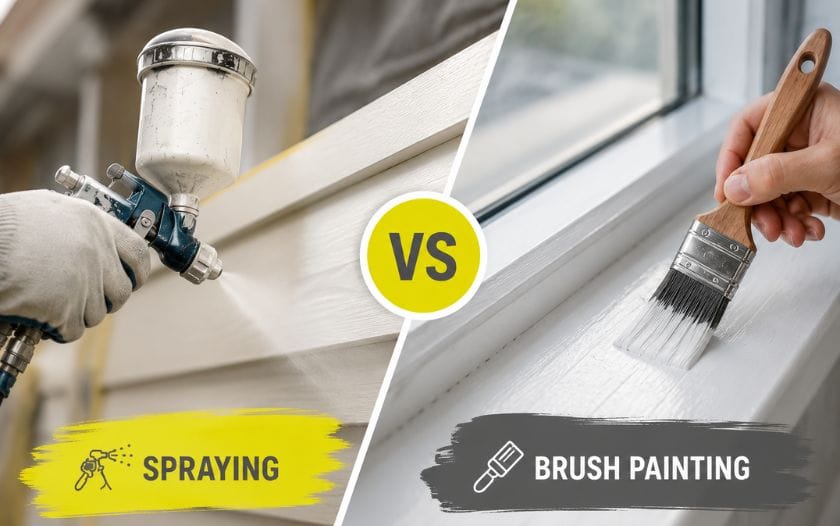
If you’re planning a painting project, you may be wondering whether spray painting or brush painting is the better choice. Both methods can provide a high-quality finish, but the right option depends on the surface, size of the area and finish required.
Spray painting provides smooth, even coverage and works well across larger areas. However, brush painting makes it easier to apply paint precisely around edges, corners and detailed areas.
At DLC Decorating, we provide professional timber spraying, painting and residential decorating services across Surrey and South West London. Before recommending a method, we assess the surface condition, existing coating, access and surrounding areas to determine which approach is most suitable for the project.
Key Takeaways
- The main difference between spray painting and brush painting is that spray painting applies paint evenly across larger surfaces for a smooth finish, whereas brush painting allows paint to be applied precisely to edges, mouldings, corners and detailed timber features.
- Spray painting requires more masking to protect surrounding areas from overspray, whereas brush painting usually requires less masking because the paint is applied directly to the surface.
- Spray painting requires specialist spray equipment to apply the paint, whereas brush painting applies paint using traditional paintbrushes.
Understanding Spray Painting
Spray painting is a method of applying paint using specialist spray equipment to create a smooth, even finish. It can be used on interior and exterior surfaces, including timber, walls, ceilings, doors, furniture, woodwork and metalwork.
Before spray painting, the surface is prepared and surrounding areas are carefully masked to protect them from overspray. The paint is then sprayed in controlled, even coats to achieve consistent coverage without brush or roller marks. The number of coats and type of primer or paint used will depend on the surface, its condition and the finish required.
Pros of Spray Painting
- Produces a smooth, consistent finish across large timber surfaces, such as garage doors or timber cladding.
- Provides even coverage on mouldings, grooves, and detailed profiles, making it suitable for sash windows and panelled doors.
- Applies paints, stains, varnishes, and protective coatings with a controlled finish.
- Efficient for larger decorating projects involving multiple windows, fencing, or exterior woodwork.
- Suitable for both interior and exterior timber when the correct coating system is selected.
- Can provide long-lasting protection when the timber is properly prepared and maintained.
Cons of Spray Painting
- Requires careful masking and preparation to protect glazing, brickwork, floors and nearby surfaces from overspray.
- Requires specialist spray equipment and correct application techniques to achieve an even finish.
- Exterior spray painting requires suitable weather conditions, as wind and rain can affect application and drying.
- Overspray needs to be carefully contained, particularly near neighbouring properties, vehicles, patios and plants.
- May not be the most practical method for small areas or minor touch-ups where extensive masking would be required.
Understanding Brush Painting
Brush painting is the process of applying paint, stain, varnish, or protective wood treatments to timber using brushes. It is a traditional decorating method and is commonly used on both interior and exterior woodwork to improve appearance, protect the surface, and extend the lifespan of the timber.
This method is suitable for doors, windows, skirting boards, staircases, fencing, gates, and built-in joinery. For example, repainting a front door with decorative panels or touching up a section of timber fencing is often easier with a brush, as it provides better control in smaller or more detailed areas.
Pros of Brush Painting
- Allows accurate painting around edges, mouldings, and detailed timber features.
- Well suited to smaller projects, such as front doors, staircases, or individual window frames.
- Ideal for touch-ups and localised repairs without repainting larger areas.
- Requires minimal equipment, making it suitable for projects with limited access.
Cons of Brush Painting
- Brush marks may be visible if the paint is applied incorrectly or unsuitable products are used.
- Achieving a perfectly consistent finish across large surfaces requires time and careful application.
- Multiple coats are often needed to achieve the desired coverage and appearance.
Spraying vs Brush Painting: What’s the Difference?
The main difference between spray painting and brush painting is the application method. Spray painting applies paint as a fine mist using spray equipment, whereas brush painting applies paint directly to the surface using a paintbrush. The table below highlights the key differences to help you compare both options.
| Feature | Spray Painting | Brush Painting |
|---|---|---|
| Application Method | Applies paint or coatings as a fine spray using specialist spray equipment. | Applies paint, stain, or protective coatings using brushes. |
| Finish | Creates a smooth, even finish with consistent coverage across the surface. | Produces a traditional hand-applied finish that depends on the application technique. |
| Best For | Large or uniform surfaces, including walls, ceilings, doors, cladding and fencing. | Smaller projects, detailed woodwork, front doors, staircases, skirting boards, and touch-ups. |
| Application Speed | Covers large surface areas quickly once preparation and masking are complete. | Takes longer on larger surfaces as each section is painted by hand. |
| Preparation | Requires careful masking to protect surrounding areas from overspray. | Requires surface preparation but generally less masking. |
| Weather Dependence | Exterior work is more dependent on suitable weather conditions. | Also affected by weather, but generally less sensitive to light wind. |
| Equipment Required | Requires specialist spray equipment and experience. | Requires brushes and standard decorating equipment. |
| Suitable Projects | Large residential and commercial decorating projects. | Small decorating projects, maintenance work, and localised repairs. |
To see examples of professionally completed painting and decorating projects, explore our recent work.
Finish Quality: Preparation Comes Before the Finish
Spray painting creates a smooth, even finish with no visible brush marks, whereas brush painting leaves a more traditional hand-painted finish where light brush marks may be visible.
The final quality depends on more than the application method. Before spray painting or brush painting, surfaces need to be cleaned, repaired, sanded and prepared as required. Good preparation helps the paint adhere properly and creates a more durable, consistent finish.
For larger offices, schools, retail units, and other business premises, our commercial painting and decorating services can include the most suitable application method for the surfaces, access and finish required.
Preparation: This Is Where Most Problems Start
Both spray painting and brush painting require surfaces to be properly prepared before paint is applied. This can include cleaning, sanding, repairing damaged areas, removing loose paint and applying primer where needed.
The main difference is masking. Spray painting requires more masking to protect windows, brickwork, floors and nearby areas from overspray. Brush painting usually requires less masking because paint is applied directly to the surface.
If you’re planning a larger exterior project, our exterior painting and decorating services include proper surface preparation and professional paint application for a durable, high-quality finish.
Application Speed: It Depends on the Project
Spray painting is generally faster than brush painting for covering large surfaces once preparation and masking are complete. In comparison, brush painting takes longer across larger areas because the paint is applied by hand, but it requires less masking and is often more practical for smaller surfaces, detailed areas and touch-ups.
However, the total project time depends on the size and condition of the surface, access, preparation requirements and drying times.
Durability: It’s More Than the Application Method
Spraying and brush painting can both provide a durable finish when carried out correctly. The main difference is that spraying applies a uniform coating across large surfaces, whereas brush painting allows greater control over edges, joints, and detailed woodwork.
From our experience, how long the paint lasts depends more on proper preparation, the right paint and the condition of the surface than the painting method used.
Cost: Every Project Is Different
The cost of spray painting and brush painting depends on the size of the project, surface preparation, access and the finish required. Spray painting can involve higher preparation and masking costs, whereas brush painting may cost more in labour because the paint takes longer to apply by hand.
Cost Comparison at a Glance
| Factor | Spray Painting | Brush Painting |
|---|---|---|
| Labour | More time is required for masking, surface protection and setting up spray equipment, but paint can be applied quickly across larger areas. | More time is spent applying each coat by hand, particularly on larger surfaces or detailed timber. |
| Equipment | Requires specialist spray equipment and masking materials to apply paint evenly and control overspray. | Uses traditional brushes and standard decorating equipment with minimal specialist tools. |
| Best Value | Often offers better value for larger projects involving multiple windows, doors, timber cladding, fencing, or extensive woodwork. | Often offers better value for smaller projects, detailed joinery, touch-ups, and individual timber features. |
Online prices rarely reflect the actual cost because every painting project is different. From our experience, we assess the surface condition, repairs, preparation, access, and area to be painted before recommending spray painting or brush painting and providing an accurate quotation.
Which Should You Choose: Spraying or Brush Painting?
Spraying is best for achieving a smooth, even finish across larger surfaces and detailed joinery, whereas brush painting suits smaller areas, touch-ups and work requiring greater control. The right method depends on the timber condition, project size and quality of finish required.
Choose Spray Painting If
We generally recommend spraying when you:
- Want a smooth, consistent finish with no visible brush marks.
- Need to paint large or uniform surfaces such as walls, ceilings, doors, fencing or cladding.
- Want an efficient application once the preparation and masking have been completed.
- Prefer a factory-like finish using professional spray equipment.
Choose Brush Painting If
We generally recommend brush painting when you:
- Are decorating detailed timber features such as panelled doors, mouldings, staircases, or bespoke joinery.
- Need greater control around edges, corners, and intricate profiles.
- Want to refresh individual timber features without extensive masking.
- Prefer a traditional hand-applied finish.
If you’re unsure which method is right for your property, request a free quotation. We’ll assess your property and recommend the most suitable approach based on its condition, the finish you’re looking to achieve, and the long-term performance you expect.
Which Painting Method is Best for Different Surfaces: Spray Painting or Brush Painting?
Spraying is generally better for doors, walls, fencing and larger surfaces where a smooth, uniform finish matters. Similarly, brush painting is often more practical for detailed timber mouldings, smaller timber sections and on-site areas where precision and control are more important.
| Timber Feature | Best Method | Why? |
|---|---|---|
| Walls and Ceilings | Spray Painting | Provides smooth, even coverage across large areas. |
| Timber Doors | Spray Painting | Creates a smooth, consistent finish with minimal application marks. |
| Timber Window Frames | Spray or Brush | Spraying suits larger projects; brushing is practical around glazing and detailed edges. |
| Timber Cladding | Spray Painting | Covers large timber surfaces evenly and efficiently. |
| Fascias and Soffits | Spray or Brush | The best method depends on access, surrounding areas and the amount of masking required. |
| Skirting Boards and Trim | Brush Painting | Makes it easier to apply paint precisely along edges and detailed profiles. |
| Fencing | Spray Painting | Covers multiple panels and repetitive timber sections efficiently. |
| Detailed Timber Mouldings | Brush Painting | Allows paint to be applied precisely to small details, edges and profiles. |
| Large Commercial Surfaces | Spray Painting | Covers extensive areas efficiently once preparation is complete. |
| Small Areas and Touch-Ups | Brush Painting | Requires less masking and is practical for localised work. |
Conclusion
Spray painting and brush painting are both effective ways to protect and improve different surfaces, but each method suits different projects. Spray painting is generally better for larger surfaces and smooth, even finishes, whereas brush painting is often more suitable for smaller areas and detailed work.
At DLC Decorating, we have over 30 years of painting and decorating experience, providing spray painting, including specialist timber spraying, and brush painting for residential and commercial properties across Surrey, South London and West London. We assess your surfaces, project requirements and desired finish to recommend the most suitable painting method. Contact us today to discuss your project.
FAQs
Which is better for timber doors: spraying or brush painting?
The better option for timber doors depends on the style of the door and the finish you want to achieve. Timber spraying is ideal for a smooth, even finish, whereas brush painting is better suited to panelled doors and detailed timber features that require greater precision.
Which method is faster: spraying or brush painting?
Spraying is generally faster than brush painting once the preparation and masking have been completed. However, the overall project time depends on the amount of preparation required, the condition of the timber, and the size of the project.
Should I hire a professional for spray painting or brush painting?
Yes, hiring a professional is recommended for both spraying and brush painting. A professional decorator can prepare the surface correctly, choose the right coating, and apply it using the most suitable method to achieve a durable, high-quality finish.
Can I change from brush painting to spraying when repainting?
Yes, you can change from brush painting to spraying when repainting. The existing coating must be properly cleaned, prepared, and compatible with the new coating to achieve a smooth, durable finish.
Does spraying use more paint than brush painting?
Spraying can use more paint than brush painting because some material is lost as overspray. However, professional equipment and correct application techniques help minimise waste and achieve an even, consistent finish.