Peeling edges, visible seams and old wallpaper can quickly make a room feel dated, but removing the paper can involve more work. Stripping wallpaper can uncover damaged plaster, stubborn adhesive, and uneven walls that need repair before you can paint.
Painting over wallpaper can be a practical alternative, but only when the surface is suitable. If the paper is loose, bubbling, damp or poorly bonded, the new paint may crack, peel or highlight the joins underneath instead of hiding them.
At DLC Decorating, we provide professional painting and decorating services across Surrey, South London and West London. The condition and type of wallpaper will affect the final result. Knowing when to paint over it, how to prepare it and when to remove it can prevent peeling, bubbling and an uneven finish.
Key Takeaways
- You can paint over wallpaper when it is firmly bonded, reasonably smooth and free from moisture or majproor damage.
- Paint over wallpaper only when there are no loose seams, bubbles, damp, mould or major damage.
- Remove the wallpaper first if it is peeling, bubbling, heavily textured, damp or poorly bonded.
- Paper, lining, Anaglypta, patterned and some vinyl wallpapers can usually be painted with the right preparation.
- You can paint over wallpaper yourself if the surface is sound and you are confident with preparation, priming and painting.
Can You Paint Over Wallpaper?
Yes, you can paint over wallpaper if it is firmly attached, dry and in good condition. The surface also needs to be properly cleaned, repaired and primed so the new paint can bond correctly.
Painting over wallpaper works best when there are no loose edges, bubbles, tears or signs of moisture. Any damaged areas should be repaired first, and visible seams may need light filling or sanding to create a smoother finish.
If the wallpaper is peeling, heavily textured, damp or poorly bonded to the wall, removing it is usually the better option. Painting over an unstable surface can lead to cracking, bubbling or peeling later.
When Is It Safe to Paint Over Wallpaper?
It is generally safe to paint over wallpaper when the paper is firmly bonded to the wall, dry, reasonably smooth and free from major damage. The existing surface should also be stable enough to handle cleaning, preparation and new paint without lifting.
Painting over wallpaper is usually suitable when:
- Well attached: The paper is firmly bonded with no lifting edges, loose seams or bubbles.
- Limited wallpaper layers: A single well-bonded layer usually provides a more predictable base. Multiple layers need closer inspection because movement or weak adhesion underneath can affect the finish.
- Smooth surface: The wallpaper is flat and does not have deep texture, heavy embossing or raised fibres that could show through the paint.
- Dry conditions: The wall and surrounding room are free from damp, mould and ongoing moisture problems.
- Good overall condition: The wallpaper is clean, stable and strong enough to be repaired, primed and painted without lifting.
When Should You Remove Wallpaper Instead of Painting Over It?
You should remove wallpaper instead of painting over it when the paper is loose, damaged, damp, heavily textured or no longer firmly bonded to the wall. These problems can affect paint adhesion and lead to an uneven or short-lived finish.
- Peeling or Loose Edges: The paper is lifting at the seams, corners or edges.
- Bubbling or Blistering: Air pockets show that the wallpaper is no longer firmly bonded.
- Multiple Layers: Several layers can create an unstable surface for new paint.
- Heavy Texture: Raised patterns or deep embossing may remain visible after painting.
- Damp or Mould: Moisture problems should be fixed before redecorating.
- Torn or Damaged Areas: Large defects can be difficult to hide with paint.
- Failing Adhesive: Loose sections may continue to lift after painting.
- Uneven Surface: Removing the paper gives you a better base for a smoother finish.
What Types of Wallpaper Can You Paint Over?
You can paint over several types of wallpaper, including paper, vinyl, textured, Anaglypta and paintable wallpaper, provided the wall covering is firmly bonded and suitable for decorating. The preparation needed will depend on the wallpaper material and finish.
| Wallpaper Type | Can You Paint Over It? | What to Consider |
|---|---|---|
| Paper Wallpaper | Yes | Works well if the paper is smooth, secure and free from damage. |
| Vinyl Wallpaper | Sometimes | Often needs a suitable primer so the new paint can bond properly. |
| Textured Wallpaper | Yes | The texture or raised pattern may still show through the finished paint. |
| Anaglypta Wallpaper | Yes | Designed to be painted and generally accepts paint well. |
| Paintable Wallpaper | Yes | Made specifically for painting and usually gives a reliable finish. |
| Patterned Wallpaper | Yes | Bold colours or patterns may need primer and extra coats for full coverage. |
| Damaged or Peeling Wallpaper | No | Loose or damaged paper should normally be removed before painting. |
How to Prepare Wallpaper Before Painting?
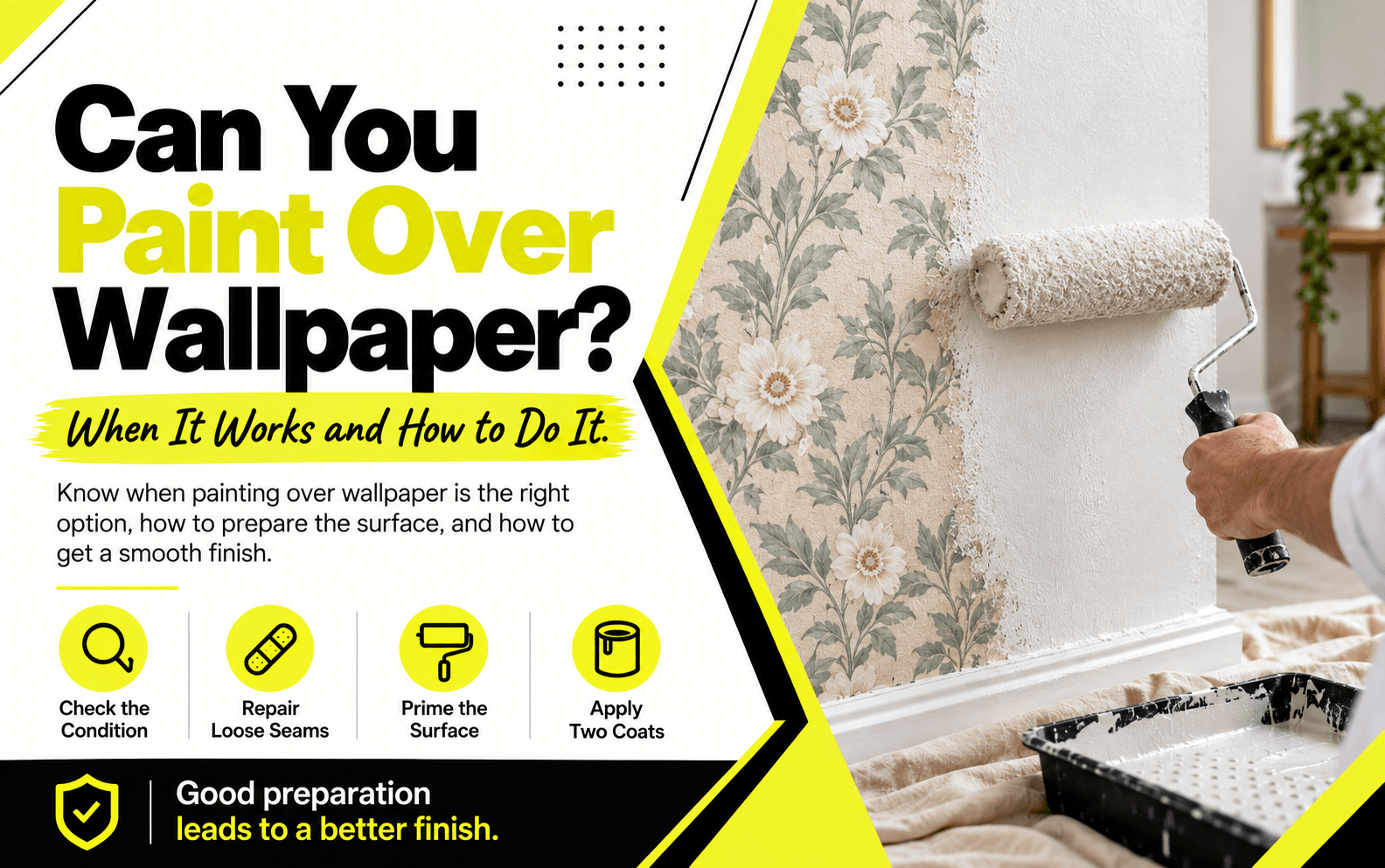
To prepare wallpaper before painting, clean the surface, secure any loose edges or seams, repair small defects, lightly sand where needed and apply a suitable primer or sealer.
1. Check the Wallpaper Condition
Look for lifting edges, open seams, bubbles, tears, staining or signs of damp. If large areas are loose or badly damaged, removing the wallpaper may give a better result than painting over it.
2. Repair Loose Seams and Small Damage
Secure any loose edges before painting and fill minor imperfections where needed. Do not rely on paint to hold damaged wallpaper in place.
3. Clean the Surface
Remove dust, grease and surface marks with a lightly damp cloth or suitable cleaner. Avoid soaking the wallpaper, as too much moisture can weaken the adhesive underneath.
4. Smooth Rough Areas
Lightly sand repaired or uneven areas where necessary. The aim is to create a more even surface without damaging the wallpaper itself.
5. Prime or Seal the Wallpaper
Use a suitable primer or sealer if needed, especially on vinyl, patterned or stained wallpaper. This can improve adhesion and help reduce the risk of stains or patterns showing through the final paint.
DLC Expert Tip: With more than 30 years of decorating experience, we recommend checking the wallpaper seams again after preparation and before applying paint. Small areas of lifting can become much more noticeable once the first coat dries.
If the existing wall covering is badly damaged or you are planning a wider room update, DLC Decorating’s residential decorating services can include surface preparation as part of the decorating work.
How to Paint Over Wallpaper?
To paint over wallpaper, inspect the wallpaper, clean the surface, repair loose areas, sand where needed, apply a suitable primer, allow it to dry, then apply the first and second coats of paint.
- Inspect the Wallpaper: Check for peeling edges, loose seams, bubbles, dampness, or other damage before starting.
- Clean the Surface: Remove dust, grease and marks, then allow the wallpaper to dry completely.
- Repair Loose Areas: Re-stick lifting seams or edges and fill any small gaps or damaged sections.
- Sand Where Needed: Lightly sand uneven repairs, raised seams or glossy surfaces so the primer can bond properly.
- Apply a Suitable Primer: Use a bonding, stain-blocking, oil-based or shellac-based primer depending on the wallpaper type and condition.
- Allow the Primer to Dry: Follow the manufacturer’s drying time before applying paint.
- Apply the First Coat: Use a roller for larger areas and a brush for edges, corners and around fittings.
- Apply a Second Coat: Once the first coat is fully dry, add a second coat for more even colour and coverage.
DLC Expert Tip: Do not apply heavy coats of paint. Thin, even coats reduce the chance of moisture affecting the wallpaper adhesive and usually give a cleaner finish.
What Problems Can Happen When Painting Over Wallpaper?
Painting over wallpaper can cause problems if the paper is loose, damaged or poorly prepared. Common issues include bubbling, peeling, visible seams, uneven texture, staining and poor paint adhesion.
- Bubbling: Moisture from the paint can loosen the wallpaper adhesive and create raised areas.
- Peeling: Loose edges or weak adhesive can cause the wallpaper and paint to lift.
- Visible Seams: Joins between wallpaper strips may still show through the finished paint.
- Uneven Texture: Raised patterns, repairs or damaged areas can remain visible after painting.
- Staining: Old marks, adhesive or water stains may bleed through without the right primer.
- Poor Adhesion: Paint may not bond properly to glossy, vinyl or contaminated wallpaper surfaces.
DLC Expert Tip: Bubbling, peeling and cracking can also affect painted walls when moisture, poor preparation or weak adhesion is present. Our guide on why paint bubbles, peels or cracks explains the common causes in more detail.
Can You Paint Directly Over Wallpaper Without Primer?
No, you should not paint directly over wallpaper without a primer. Applying a suitable primer first helps the paint bond properly, seals the surface and reduces the risk of stains, patterns or old adhesive affecting the final finish.
Primer is particularly useful on vinyl, patterned, stained or slightly glossy wallpaper, where adhesion or coverage may be more difficult. It can also help the finish look more even once the topcoats are applied.
DLC Expert Tip: We generally recommend priming wallpaper before painting, particularly where the surface is vinyl, glossy, stained or strongly patterned. Choosing the right primer for the wallpaper type and condition can improve adhesion and help create a more reliable finish.
How Many Coats of Paint Do You Need Over Wallpaper?
When painting over wallpaper, you usually need one coat of suitable primer followed by two coats of paint. This gives the surface a sealed base, helps the paint cover evenly and reduces the chance of the old pattern or colour showing through.
If the wallpaper is dark, strongly patterned or difficult to cover, you may need an additional finish coat. Allow each coat to dry fully before applying the next one.
Can You Paint Over Wallpaper Yourself?
You can paint over wallpaper yourself if the paper is sound, well adhered and free from moisture or major damage, and you are confident with basic decorating work. The main steps are cleaning the surface, repairing loose areas, sanding where needed, priming and applying the paint evenly.
DIY painting can work well on small areas. However, if the wallpaper is peeling, heavily textured, damaged or affected by damp, it is better to deal with those problems first.
DLC Expert Tip: If you are unsure whether the wallpaper is suitable for painting, professional preparation can help prevent bubbling, peeling and visible seams later.
When Should You Call a Professional Decorator?
You should call a professional decorator if the wallpaper is damaged, heavily textured, difficult to prepare, affected by damp or covering a large area. Professional help is also useful when you want a smoother, longer-lasting finish without risking peeling, bubbling or visible seams.
A decorator can assess whether the wallpaper should be painted or removed, choose the right primer and prepare the surface properly before applying the finish coats.
DLC Expert Tip: We can identify surface problems early and recommend the most suitable approach before painting begins. If you need help with wallpaper preparation or repainting, explore our painting and decorating services for professional support.
What Do We Check Before Painting Over Wallpaper?
Before painting over wallpaper, we check whether the surface is secure, dry, clean and suitable for painting. This helps us decide whether the wallpaper can be prepared and painted or whether removal would give a better result. At DLC Decorating, we typically check:
- Loose Edges or Seams: We look for lifting sections that could peel further after painting.
- Bubbles or Blisters: These can indicate weak adhesion beneath the wallpaper.
- Damp or Mould: Any moisture issue should be addressed before decorating.
- Surface Texture: Heavy embossing or raised patterns may still show through the paint.
- Wallpaper Condition: Tears, stains and damaged areas may need repair or removal.
- Number of Layers: Multiple wallpaper layers can create a less stable base.
- Wall Condition Underneath: Where possible, we assess whether the wall may need filling, sanding or further preparation.
Conclusion
Painting over wallpaper can work well when the existing covering is firmly bonded, reasonably smooth and suitable for decorating. The quality of the final result depends heavily on preparation, including repairing loose seams, dealing with stains or damage and using the right primer where needed.
If the wallpaper is peeling, bubbling, heavily textured, affected by damp or poorly bonded, removing it will usually provide a more reliable base. Adding extra coats of paint will not correct problems underneath the surface and can make defects more noticeable over time.
With more than 30 years of decorating experience, DLC Decorating helps homeowners across Surrey, South London and West London achieve clean, durable finishes through careful preparation and professional decorating. You can view our recent projects to see examples of our work, or contact us if you need advice on whether your wallpaper should be painted or removed.
FAQs
Can you paint over vinyl wallpaper?
You can paint over vinyl wallpaper if it is firmly bonded, clean and free from peeling or significant damage. Since vinyl has a smooth surface, use a suitable bonding primer first, so the paint can adhere properly and give a more even, longer-lasting finish.
Can you paint over patterned and lining wallpaper?
You can paint over both patterned and lining wallpaper when the covering is well adhered and provides a stable surface for decorating. Patterned wallpaper may need a suitable primer to stop colours or designs showing through, while lining paper usually provides a good base for paint when the seams are secure and the surface is smooth.
Is it better to paint over wallpaper or remove it?
Removing wallpaper is usually better if it is loose, damaged, damp or heavily textured. Painting over it can work well when the paper is smooth, secure and in good condition.
How long does paint take to dry over wallpaper?
Drying time depends on the paint, primer, temperature and ventilation. Follow the manufacturer’s stated drying and recoating times, and make sure each coat is fully ready before applying the next.
Will wallpaper bubble if you paint over it?
Yes, wallpaper can bubble after painting if moisture from the paint loosens the adhesive underneath. This is more likely when the paper is already loose, poorly bonded or not properly primed.