Written by DLC Decorating Ltd
Reviewed from the perspective of David Churchill and the DLC Decorating team. DLC Decorating provides professional painting and decorating services across Surrey and South West London.
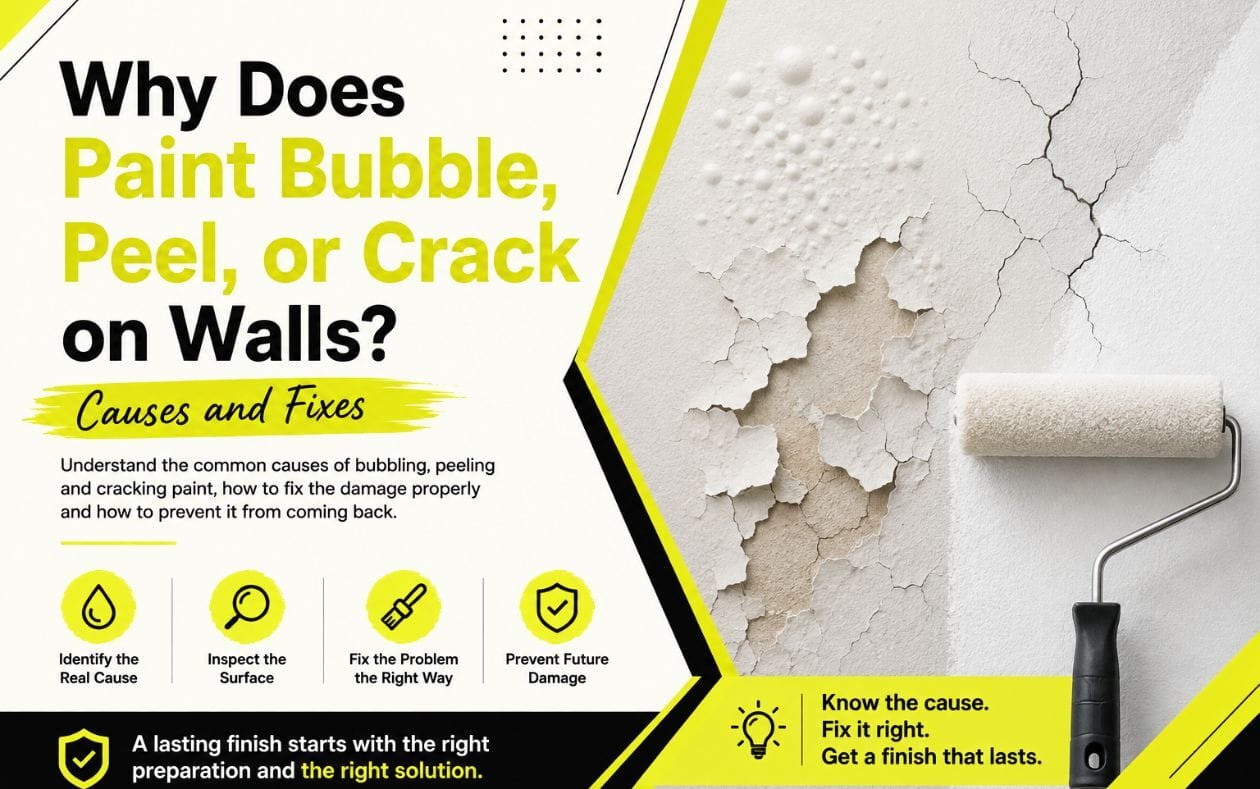
If you have noticed paint bubbling, peeling, or cracking on your walls, you may be wondering why it is happening. Paint can look fine at first, but over time, bubbles, peeling edges, or cracks can begin to appear. The problem may be with the paint itself or the wall underneath.
The short answer is that paint usually bubbles, peels, or cracks because of moisture, poor surface preparation, weak adhesion, incompatible paint layers, or movement in the surface beneath the paint.
Simply painting over the damage rarely provides a lasting fix. The underlying cause needs to be identified and the surface properly prepared before repainting.
At DLC Decorating, we have over 30 years of painting and decorating experience across Surrey, South London and West London. One thing we often explain to homeowners is that a lasting painted finish starts with identifying the cause of the problem and preparing the surface properly before repainting.
Key Takeaways
- To identify the cause of damaged paint, check the type of damage, where it appears, and the condition of the surface underneath.
- Paint bubbles, peels, or cracks on walls when moisture, poor surface preparation, weak adhesion, unstable plaster, or movement beneath the surface causes the paint to lose its bond or split.
- You can prevent paint from bubbling, peeling, or cracking again by fixing the underlying cause and preparing the wall properly before repainting.
What Are the Most Common Paint Problems on Walls?
The most common paint problems on walls are bubbling, peeling, cracking, flaking, blistering, and poor adhesion. These problems can affect the appearance, smoothness, and overall quality of the painted surface.
What Is the Difference Between Bubbling, Peeling and Cracking Paint?
The main difference between bubbling, peeling, and cracking is that bubbling creates raised pockets in the paint, peeling causes the paint to lift away from the wall, and cracking creates fine lines or splits across the painted surface.
| Paint Problem | What It Looks Like | What Happens to the Paint |
|---|---|---|
| Bubbling | Raised bubbles or blister-like patches | The paint lifts away from the surface underneath. |
| Peeling | Loose edges, flakes, strips, or sheets | The paint separates and comes away from the wall. |
| Cracking | Fine lines, splits, or larger cracks | The painted surface splits and may eventually begin to flake. |
What Causes Paint Problems on Walls?
Paint problems on walls are most often caused by moisture, poor surface preparation, damaged plaster, incompatible paint layers, or incorrect application. These problems prevent the paint from forming or maintaining a secure bond with the wall, which can result in bubbling, peeling, flaking, or cracking.
1. Moisture and Damp
Moisture can enter a wall through leaking pipes, water getting in around windows or roofs, condensation, or other damp-related issues. Painting before the moisture problem has been fixed can trap moisture within or behind the coating and weaken the paint’s bond with the wall.
Before redecorating, the source of any moisture should be identified and corrected, and the wall should be given enough time to dry.
2. Poor Surface Preparation
Paint needs a clean, dry, and stable surface to bond correctly. Dust from sanding or filler, grease, loose previous coatings, and other contamination can create a weak layer between the wall and the new paint.
Preparation should be based on the condition of the surface. This may involve removing loose material, cleaning the wall, filling defects, sanding repairs, and removing dust before any new coating is applied.
3. Damaged or Powdery Plaster
Loose, cracked, crumbling, or powdery plaster does not provide a stable base for decorating. If the plaster underneath is damaged, covering it with fresh paint may hide the problem temporarily, but it does not repair the surface.
Before painting, damaged plaster should be checked and repaired where necessary. Powdery or highly absorbent areas may also need additional preparation or a suitable product before new paint is applied.
4. Incompatible Paint Layers
Problems can occur when a new coating is applied over existing paint that it cannot bond to properly. For example, water-based paint applied directly over some older glossy or oil-based finishes may have poor bonding without the correct preparation or primer.
Identifying the existing finish helps determine whether it needs cleaning, sanding, priming, or another form of preparation before repainting.
5. Painting Over Wallpaper Paste
Wallpaper paste can remain on a wall after the paper has been removed, even when the surface appears clean. If fresh paint is applied over this residue, it can react with the moisture in water-based paint and affect the finished surface.
Why Does Paint Bubble?
Paint bubbles when the paint loses grip on the wall and lifts away from the surface, forming raised blisters or pockets. This usually happens when moisture becomes trapped beneath the paint, the wall is not fully dry before decorating, or the coating has not bonded properly to the surface underneath.
If paint starts to bubble, you may notice different patterns depending on what is causing the problem. Common signs include:
- Bubbles near windows or external walls can point to moisture or water penetration.
- Blistering in kitchens and bathrooms may be caused by condensation or high humidity.
- Bubbles appearing soon after painting can indicate that the surface was damp, unstable, or poorly prepared.
- Bubbling over fresh plaster or repairs may occur if the surface was painted before it was fully dry.
- Bubbles forming between paint layers can indicate poor adhesion between the old and new coatings.
What Causes Peeling Paint on Walls?
Peeling paint on walls happens when the paint loses its bond with the surface and starts to flake, curl, or come away in strips or sheets. This is often linked to ageing paintwork, incompatible coatings, or an unstable surface underneath.
Common signs of peeling paint include:
- Paint flaking around the edges can mean the existing coating has become weak or brittle.
- Paint coming away in strips may indicate poor adhesion between paint layers.
- Paint peeling back to bare plaster can suggest the plaster was not properly prepared or sealed.
- Large areas peeling away can indicate that the existing paintwork is no longer a suitable base for decorating.
Why Does Paint Crack?
Paint cracks because the paint coating becomes brittle, loses flexibility, or cannot cope with movement in the wall underneath. It can also crack when coats are applied too thickly, paint layers dry unevenly, or changes in temperature and humidity put stress on the finish.
Below are the most common types of paint cracks and what they may indicate:
- Fine hairline cracks are often linked to old or brittle paintwork.
- Web-like cracks or crazing may suggest thick paint layers or uneven drying.
- Cracks around corners and joints can indicate movement between adjoining surfaces.
- Cracks over filled or repaired areas may be caused by shrinkage or movement in the repair.
- Deep cracks extending into the plaster can point to movement or damage within the wall.
How Can You Identify the Cause of Damaged Paint?
You can often identify the cause of damaged paint by looking at where the problem appears, what the damage looks like, and when it started. The condition of the surface underneath can also provide important clues, especially if the paint problem keeps returning after redecoration.
The table below shows some common signs and what they may indicate:
| What You Notice | What It May Indicate |
|---|---|
| Damage around windows or external walls | Water ingress, damp, or condensation may be affecting the surface. |
| Paint coming away to bare plaster | The original surface may not have been prepared correctly, or the paint may have poor adhesion. |
| Several paint layers lifting together | Older coatings underneath may be weak or unstable. |
| Powdery or crumbling plaster | The plaster itself may be damaged or unsuitable for painting without further preparation. |
| Stains, mould, or dark patches | Moisture, condensation, or another damp-related issue may be present. |
| Damage appearing soon after decorating | The surface may not have been prepared properly, allowed to dry fully, or suitable for the new coating. |
| Damage over previously repaired areas | Filler, plaster, or another repair may have shrunk, moved, or not dried fully before painting. |
| The same damage keeps returning | The underlying cause may not have been identified or properly resolved. |
DLC Decorating Tip: We recommend identifying why the paint has failed before deciding on the repair. Simply removing the visible damage and repainting can allow the same problem to return if the underlying cause has not been corrected.
How Do You Fix Damaged Paint on Walls?
To fix damaged paint on walls, identify and correct the cause first, remove any loose or unstable paint, repair the surface, and prepare it properly before repainting.
1. Fix the Cause of the Paint Damage
Start by identifying why the paint has failed, whether it is due to moisture, a leak, condensation, damaged plaster, or poor adhesion. Repair leaks, stop water from getting in around windows, control persistent condensation, and allow damp areas to dry fully. If the plaster is loose or damaged, repair it before repainting.
2. Remove Loose or Damaged Paint
Remove any bubbling, peeling, flaking, or loose paint using a scraper. Work carefully beyond the damaged area until you reach paint that is firmly attached to the wall.
If the edges continue to lift when scraped, remove them rather than painting over them. New paint needs a stable surface to bond to; otherwise, the repaired area may start peeling again.
3. Repair the Wall
Check the exposed wall for cracks, holes, loose plaster, or damaged filler. Remove any unstable material, then fill and repair the affected areas using a product suitable for the surface. Allow the repair to dry completely before sanding it smooth and level with the surrounding wall.
4. Prepare the Surface
The repaired area should be clean, dry, smooth, and stable before painting. Depending on the wall, this may involve sanding rough edges, cleaning contamination, removing dust, or preparing an older coating so the new paint can bond properly.
5. Prime Where Required
Bare plaster, repaired areas, stains, or difficult existing coatings may need a suitable primer or sealer. The product should be chosen for the particular surface rather than applying the same primer to every repair.
6. Repaint the Wall
Once the surface is properly prepared, apply the appropriate paint in even coats. Allow each coat to dry for the manufacturer’s recommended time before applying the next one.
DLC Decorating Tip: If you only scrape, fill, and repaint the damaged area without fixing the cause, bubbling, peeling, or cracking can return. Always fix any moisture, loose plaster, or adhesion problems before applying new paint.
Can You Paint Over Peeling, Bubbling, or Cracked Paint?
No, you should not paint directly over peeling, bubbling, or cracked paint. The damaged coating is already unstable, so applying fresh paint over it may hide the problem temporarily but will not create a secure, lasting finish.
Before repainting, remove loose or damaged paint, identify and fix the cause, repair any cracks or damaged plaster, sand the surface smooth, and prime where required. The wall should be clean, dry, and stable before new paint is applied.
For example, if paint is bubbling because of moisture, adding another coat will not stop the bubbling. The moisture problem needs to be fixed, and the wall allowed to dry before it is prepared and repainted.
How Can You Prevent Paint from Bubbling, Peeling, or Cracking Again?
To prevent paint from bubbling, peeling, or cracking again, keep walls dry, maintain good ventilation, deal with leaks early, and check previously damaged areas for signs of recurring problems. Regular maintenance can help you spot small issues before they cause larger areas of paint to fail.
- Keep Rooms Well Ventilated: Use extractor fans in kitchens and bathrooms and provide regular ventilation where condensation builds up. Reducing excess humidity helps prevent repeated moisture exposure to painted walls.
- Deal With Leaks Early: Check around windows, pipework, ceilings, and external walls if you notice water marks or damp patches. Fixing a small leak early can prevent moisture from spreading behind the painted surface.
- Check Previous Repairs: Regularly check areas where paint has previously bubbled, peeled, or cracked. If bubbles, lifting edges, or cracks return, the underlying problem may still be present and should be investigated before the damage spreads.
- Check Small Cracks Before They Get Worse: Do not automatically cover a returning crack with more paint. If a crack repeatedly appears in the same position or starts getting wider, check what is happening underneath before redecorating it again.
- Maintain the Painted Surface: Clean walls gently using a method suitable for the paint finish, and avoid heavy scrubbing. Check for small cracks or lifting paint early before the damage spreads.
DLC Decorating Tip: If you are unsure why your wall paint keeps failing, avoid repeatedly repainting the affected area. A professional assessment can help identify the cause and the right repair method. Contact DLC Decorating for expert advice and a free quote.
Conclusion
Paint bubbles, peels, or cracks when the coating loses adhesion, the surface underneath is unstable, or moisture and movement affect the finish. Identifying the cause before repairing the wall is the most important step, as simply covering damaged paint can allow the same problem to return.
With the right preparation, suitable products, and correct application, most paint problems can be repaired and the wall restored to a smooth, durable finish.
If you are unsure what is causing the damage, DLC Decorating can assess the condition of your walls, prepare the affected surfaces correctly, and recommend the right decorating approach. With over 30 years of experience in painting and decorating across Surrey, South London and West London, we understand how important proper preparation is when dealing with damaged or failing paint. Contact us for professional advice and a free quote.
FAQs
When Should You Call a Professional Decorator for Damaged Paint?
You should call a professional decorator if paint damage keeps returning, covers a large area, or you cannot identify what is causing it. A decorator can assess the surface, identify preparation or adhesion problems, and recommend the right repair and decorating approach.
Do You Need to Remove All the Old Paint Before Repainting a Wall?
No, you do not need to remove all the old paint if it is still firmly bonded to the wall. Only loose, peeling, flaking, or unstable paint should be removed back to a sound surface before the wall is prepared and repainted.
Why Does Paint Keep Peeling After Repainting?
Paint often keeps peeling after repainting because the original cause was not fixed before the new paint was applied. Moisture, poor adhesion, loose existing coatings, or an unstable surface can cause the fresh paint to lose its bond and peel again.
Can Cracked Paint Be Repaired Without Repainting the Whole Wall?
Yes, cracked paint can sometimes be repaired without repainting the whole wall if the damage is small and localised. However, larger or more visible repairs may require repainting the full wall to achieve an even, consistent finish.