You’ve removed the old wallpaper, but the walls still feel sticky and uneven. Patches of stubborn adhesive remain on the surface, making it difficult to prepare the walls for a fresh coat of paint.
Painting over leftover wallpaper glue can cause bubbling, peeling or an uneven finish. However, scraping too hard or using excessive water to remove the adhesive can damage the plaster underneath, leading to additional repairs before decorating.
With over 30 years of painting and decorating experience, DLC Decorating understands the importance of proper wall preparation. Knowing how to remove wallpaper glue from walls before painting helps you remove stubborn adhesive, protect the underlying surface and achieve a smooth, long-lasting paint finish.
Key Takeaways
- Removing all wallpaper glue before painting is essential to prevent poor paint adhesion, bubbling, peeling and uneven finishes.
- The tools needed to remove wallpaper glue include warm water, a sponge, a plastic scraper, a bucket and a suitable adhesive remover for stubborn residue.
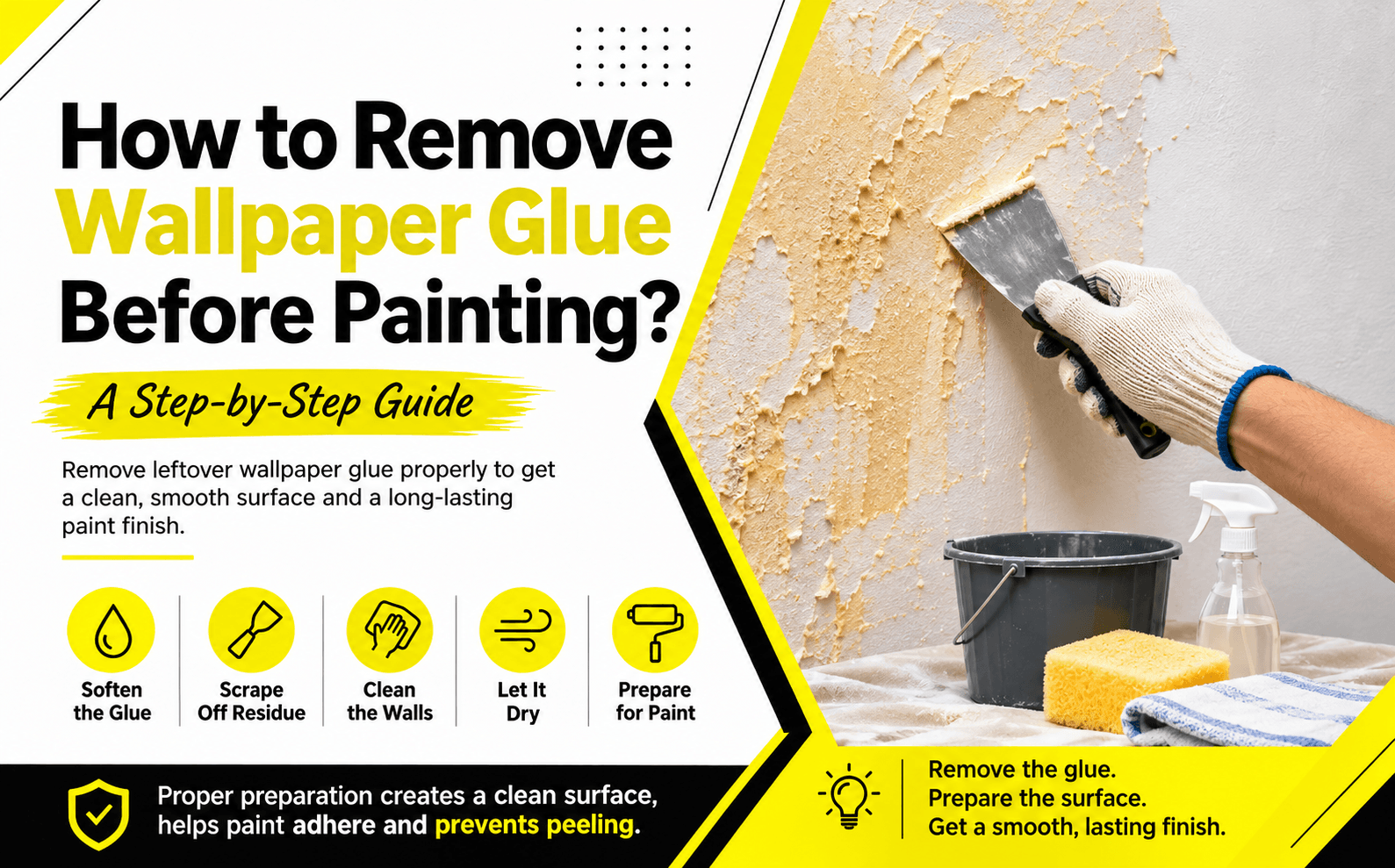
- To remove wallpaper glue from walls, first soften the adhesive with warm water, then gently scrape it away, wipe off any remaining residue and allow the surface to dry completely.
- The most common mistakes when removing wallpaper glue include using excessive water, scraping too aggressively, leaving adhesive residue and painting before the walls are dry.
What Is the Best Way to Remove Wallpaper Glue?
The best way to remove wallpaper glue is to soften the adhesive with warm water and gently clean the surface without damaging the wall. Follow these steps:
- Soften the glue: Apply warm water using a sponge and allow the glue to loosen.
- Remove the residue: Gently wipe away softened glue with a sponge or soft cloth.
- Scrape stubborn glue: Use a plastic scraper or suitable wallpaper adhesive remover if needed.
- Rinse the walls: Wipe the surface with clean water to remove remaining residue.
- Allow the walls to dry: Let the surface dry completely before preparing it for painting.
What Do You Need to Remove Wallpaper Glue From Walls?
To remove wallpaper glue from walls, you need warm water, a sponge, a plastic scraper and a few basic cleaning supplies. These tools help soften and remove leftover glue without damaging the wall surface.
- Warm water: Softens dried wallpaper glue, making it easier to remove.
- Sponge: Applies warm water and helps loosen the glue.
- Plastic scraper: Gently lifts stubborn glue without scratching the wall.
- Soft cloth or microfibre cloth: Wipes away loosened glue and remaining residue.
- Bucket: Holds warm water for cleaning and rinsing.
- Wallpaper glue remover: Helps break down stubborn glue that warm water cannot remove.
- Dust sheets: Protect floors and furniture from water and glue residue.
- Rubber gloves: Protect your hands while cleaning.
How to Remove Wallpaper Glue from Walls: Step-by-Step
To remove wallpaper glue from walls, soften the glue with warm water, gently scrape away the loosened residue and wipe the surface clean with a damp sponge. Remove any stubborn patches with a suitable wallpaper glue remover, then rinse the walls and allow them to dry completely before painting.
Step 1: Protect Floors, Furniture and Electrical Fittings
Move furniture away from the walls and cover the floors with waterproof dust sheets. Protect skirting boards and nearby surfaces from water and adhesive residue. Keep water and wet tools away from sockets, switches and other electrical fittings. Where work near electrical fittings cannot be avoided, ensure the affected circuit is safely isolated before starting.
Step 2: Soften the Wallpaper Glue with Warm Water
Fill a bucket with warm water and soak a sponge in it. Squeeze out excess water, then gently dampen the areas covered with wallpaper glue.
Work in small sections and allow the water to soften the glue for approximately 5–10 minutes, depending on the adhesive and wall condition. Check whether the glue has loosened before scraping. Avoid soaking the walls, especially plasterboard, as excessive moisture can damage the surface.
Step 3: Gently Scrape Away the Softened Glue
Use a plastic scraper to carefully lift the softened wallpaper glue from the wall. Hold it at a shallow angle and apply light pressure to reduce the risk of scratching or damaging the plaster. Test a small area first, particularly on delicate or previously repaired surfaces.
Wipe away the loosened glue with a damp sponge. If some areas remain difficult to scrape, apply more warm water and allow the glue to soften further.
Step 4: Remove Any Stubborn Wallpaper Glue
Check the wall for patches of adhesive that remain after the initial scraping. Apply warm water to these areas again and gently rub them with a sponge to loosen the residue.
If the glue still does not come away, use a suitable wallpaper adhesive remover. Follow the manufacturer’s instructions and test the product on a small, inconspicuous area before applying it more widely.
Step 5: Wipe and Rinse the Walls
Once the wallpaper glue has been removed, wipe the walls with a clean sponge and fresh water. This removes leftover glue and any residue from the cleaning products.
Rinse the sponge frequently and replace dirty water as needed. Use a clean, slightly damp cloth for a final wipe, ensuring no sticky patches remain.
If extensive repairs require fresh plaster, make sure it has dried completely before painting. The correct drying time after plastering depends on the plaster thickness and room conditions.
Step 6: Allow the Walls to Dry Completely
Leave the walls to dry naturally with good ventilation. Open windows where practical and allow enough time for moisture to evaporate before starting any painting work.
Once the walls are dry, run a clean hand over the surface and check for sticky or shiny patches. Remove any remaining glue before repairing damaged areas, sanding or applying a suitable primer.
DLC Decorating Tip: Check the walls under good lighting and run your hand over the surface before painting. Shiny patches, sticky areas or rough repairs may indicate that further cleaning or preparation is needed. Address these issues before applying primer or paint.
How Do You Prepare Walls for Painting After Removing Wallpaper Glue?
To prepare walls for painting after removing wallpaper glue, clean away any remaining adhesive, fill cracks and holes, sand uneven areas and apply a suitable primer where needed. Ensure the walls are completely dry before painting for a smooth, long-lasting finish.
Step 1: Check for Remaining Glue and Surface Damage: Inspect the walls for sticky patches, cracks or damaged plaster. Remove any remaining adhesive before proceeding.
Step 2: Fill Cracks, Holes and Uneven Areas: Apply a suitable filler to cracks and holes. Smooth the surface and allow the filler to dry completely.
Step 3: Sand and Smooth the Wall Surface: Lightly sand repaired areas with fine-grit sandpaper and remove any dust.
Step 4: Apply a Suitable Primer Where Required: Choose a suitable primer for the wall’s condition and porosity. Follow the manufacturer’s instructions to improve paint adhesion and achieve an even finish.
Step 5: Check That the Walls Are Ready for Painting: Ensure the walls are clean, smooth and completely dry before applying paint.
Need Professional Help With Wall Preparation and Painting?
DLC Decorating provides professional painting and decorating services in Surrey, from careful wall preparation and surface repairs to achieving a smooth finish.
Can You Paint Over Wallpaper Glue?
No, painting directly over wallpaper glue is not recommended. Leftover glue can prevent paint from sticking properly, causing bubbling, peeling or an uneven finish. Moisture from fresh paint may also reactivate the glue, leaving visible patches.
Before painting, remove all wallpaper glue, clean the walls and allow them to dry completely. Repair any damaged areas and apply a suitable primer where needed for a smooth, long-lasting finish.
If you’re considering keeping the existing wallpaper instead of removing it, understanding whether you can paint over wallpaper can help you decide which approach is suitable for your walls.
What Mistakes Should You Avoid When Removing Wallpaper Glue?
Common mistakes when removing wallpaper glue include using too much water, scraping too aggressively, and leaving glue residue behind. These mistakes can damage the wall surface and affect the final paint finish.
- Using too much water: Excess moisture can soften plaster and damage plasterboard.
- Scraping too aggressively: Sharp tools or excessive pressure can scratch walls and damage plaster.
- Not allowing the glue to soften: Scraping dried glue without softening it first can damage the wall surface.
- Using unsuitable cleaning products: Harsh chemicals may damage existing paint or plaster.
- Leaving wallpaper glue behind: Remaining glue can cause bubbling, peeling or uneven paint coverage.
- Painting before the walls are dry: Trapped moisture can affect paint adhesion and spoil the finish.
When Should You Call a Professional Decorator to Remove Wallpaper Glue?
You should call a professional decorator when wallpaper glue is difficult to remove, the plaster is damaged, or large areas need preparation before painting. Professional help can prevent further surface damage and ensure a smooth, long-lasting finish.
- Stubborn adhesive: Glue remains despite repeated cleaning and gentle scraping.
- Damaged plaster: Cracks, peeling plaster or uneven surfaces require repairs.
- Large wall areas: Multiple rooms need extensive adhesive removal and preparation.
- Delicate surfaces: Older plaster or plasterboard requires careful handling.
- Preparing for repainting: You want properly cleaned, repaired and primed walls before decorating.
Conclusion
Knowing how to remove wallpaper glue from walls before painting helps you avoid peeling, bubbling and uneven paintwork. Take time to soften and remove the glue, clean the surface and let it dry completely. Repairing damaged areas and using a suitable primer where needed will help you achieve a smooth, lasting finish.
With over 30 years of experience, DLC Decorating provides professional painting and decorating services across Surrey and South West London. From careful wall preparation to complete interior redecorating, our team can help you achieve a high-quality finish. Contact us to discuss your decorating project.
FAQs
How do you remove dried wallpaper glue from plaster walls?
To remove dried wallpaper glue from plaster walls, soften it with warm water for 5–10 minutes, then gently wipe it away with a sponge or plastic scraper. Clean the surface with fresh water and allow it to dry completely. Avoid excessive moisture or scraping to prevent damaging the plaster.
Can wallpaper glue stains show through paint?
Yes, wallpaper glue stains can show through paint if leftover glue remains on the wall. The glue may react with moisture in fresh paint, causing discolouration, shiny patches or an uneven finish. Remove all glue, clean and dry the surface, and apply a suitable primer where needed before painting.
Should you hire a painter to prepare walls after wallpaper removal?
Yes, hiring a professional painter to prepare walls after wallpaper removal is recommended if the plaster is damaged, stubborn glue remains or extensive repairs are needed. A professional can clean, repair, sand and prime the walls properly to achieve a smooth, long-lasting paint finish.
What happens if wallpaper glue gets wet during painting?
If wallpaper glue gets wet during painting, moisture from the fresh paint can reactivate the glue, causing bubbling, peeling, sticky patches or an uneven finish.
Is it necessary to remove all wallpaper glue before painting?
Yes, you should remove all wallpaper glue before painting. Leftover glue can affect paint adhesion, causing bubbling, peeling or an uneven finish.
Can you use a roller immediately after cleaning wallpaper glue?
No, you should not use a paint roller immediately after cleaning wallpaper glue. The walls must be completely dry and free from glue residue before painting.
Can you repaint a wall after removing old wallpaper glue?
Yes, you can repaint a wall after removing old wallpaper glue. Make sure all glue residue is removed and the wall is completely dry. Also, fill any cracks, sand uneven areas, and apply a suitable primer where needed.