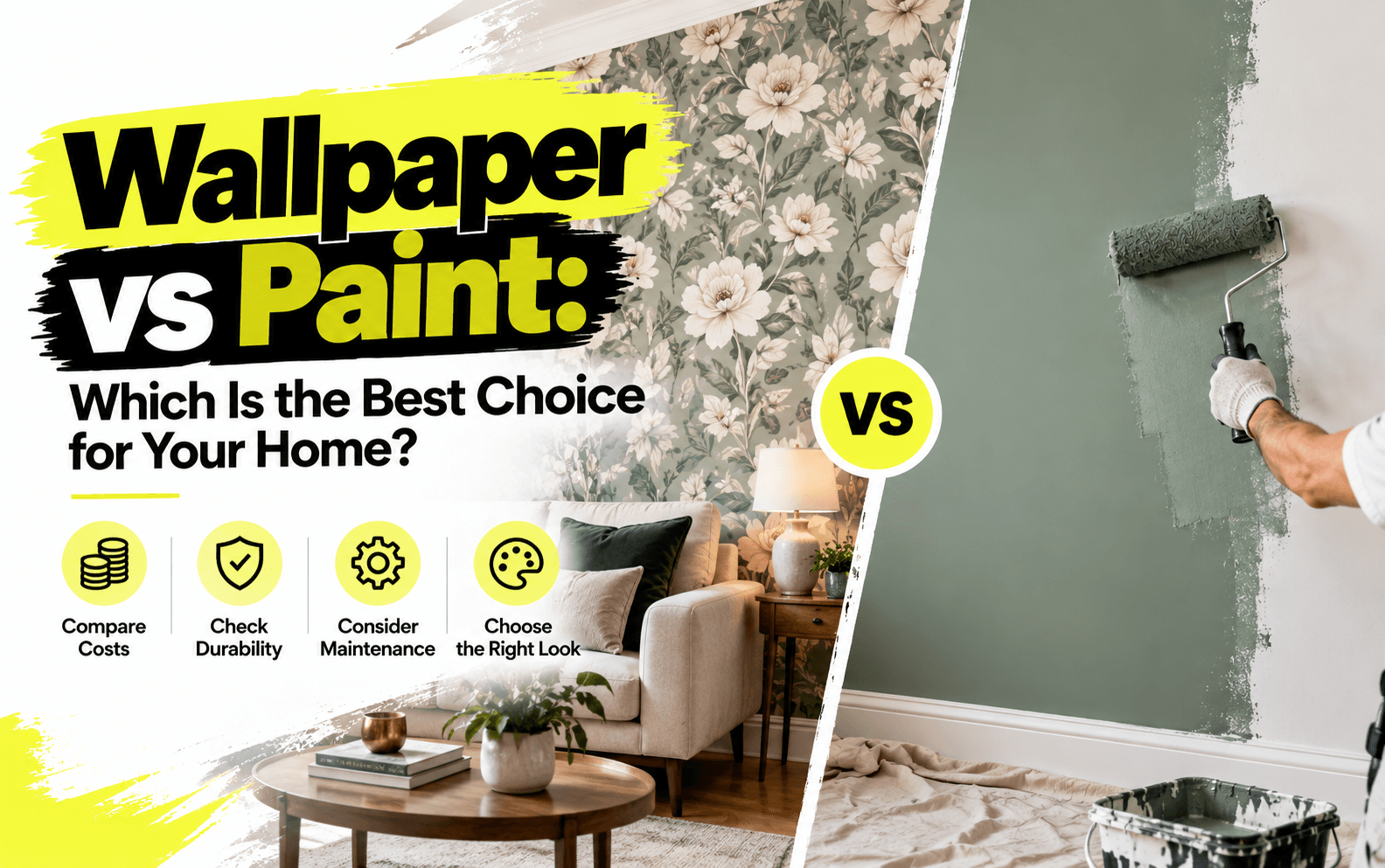
Are you planning to refresh a room but cannot decide whether wallpaper or paint will give you the best result? Both can transform your walls, but differences in cost, durability, maintenance and appearance can make the choice more difficult than expected.
The right choice depends on what you want from the room. Paint offers flexibility, easier repairs and a clean finish, while wallpaper adds pattern, texture and character. However, overlooking the condition of your walls, the room’s daily use and future maintenance could lead to extra work and expense.
With over 30 years of hands-on painting and decorating experience across Surrey and South West London, DLC Decorating understands how wall condition, room use and preparation affect the finished result. We compare wallpaper vs paint based on cost, durability, upkeep and appearance to help you choose confidently for your home.
Key Takeaways
- The main difference between wallpaper and paint is that paint provides a smooth, flexible finish, whereas wallpaper creates a more decorative surface through patterns, colours and textures.
- You can use wallpaper and paint together by adding wallpaper to a feature wall or alcove and applying a coordinating colour to the surrounding walls.
- The main factors to consider before choosing between wallpapering and painting are room use, wall condition, moisture levels, budget, maintenance and desired appearance.
- Paint generally works better in busy or moisture-prone rooms, whereas wallpaper suits dry bedrooms, living rooms and dining rooms where decorative detail matters.
What Are the Pros and Cons of Paint?
Paint is generally affordable, easy to maintain and available in a wide range of colours and finishes. However, it can reveal surface imperfections, develop scuffs and require periodic repainting. The final result depends on proper preparation and choosing a product that suits the room.
Pros of Paint
- Wide Range of Colours: Paint comes in numerous shades and finishes, making it easier to match your interior style.
- Simple to Update: You can repaint a room whenever you want to change its appearance.
- Easier Repairs: Small marks, scuffs and damaged areas can often be touched up without redoing the entire wall.
- Lower Initial Cost: Paint usually costs less to purchase and apply.
- Suitable for Most Rooms: The right product can work in living rooms, bedrooms, kitchens and bathrooms.
- Flexible Finishes: Matt, eggshell, satin and other finishes provide different levels of sheen and durability.
Cons of Paint
- Needs Thorough Preparation: Cracks, dents and uneven surfaces can remain visible unless you repair and prepare the wall properly.
- May Require Several Coats: Strong colour changes and porous surfaces often need a primer and multiple coats.
- Can Mark or Fade: Busy areas may develop scuffs, stains or faded patches over time.
- Requires Periodic Repainting: Wear, moisture and changing colour preferences can make repainting necessary.
Choose the paint finish as carefully as the colour. Durable, washable paint works well in hallways, kitchens and family rooms, whereas flatter finishes suit quieter spaces. Our interior painting guide offers further advice on preparation and application.
What Are the Pros and Cons of Wallpaper?
The main advantages of wallpaper are its distinctive patterns, textured finishes and long-lasting appearance, while its disadvantages include higher installation costs, difficult repairs and time-consuming removal.
Pros of Wallpaper
- Wide Choice of Designs: Wallpaper offers patterns, colours and finishes that paint cannot easily reproduce.
- Adds Texture and Character: Textured wallpaper can create depth and make a plain room feel more distinctive.
- Provides a Lasting Finish: Quality wallpaper can remain attractive for years when installed and maintained correctly.
- Creates a Strong Feature: Wallpaper works well on feature walls and in rooms that need a clear focal point.
- Requires Little Routine Upkeep: Many modern wallpapers only need occasional dusting or gentle wiping.
Cons of Wallpaper
- Costs More Initially: Quality materials and professional installation can often be expensive.
- Requires Precise Installation: Poor alignment, trapped air and visible seams can affect the finished appearance.
- Can be Difficult to Repair: Replacing a damaged section may become noticeable if the pattern or colour no longer matches.
- Takes Longer to Remove: Stripping old wallpaper can require considerable time and wall preparation.
- May not Suit Damp Rooms: Excess moisture can loosen the wallpaper, lift the edges and cause bubbling.
- Limits Quick Style Changes: Updating wallpaper requires removal and wall preparation.
Wallpaper vs Paint: What’s the Difference?
The main difference between wallpaper and paint is that paint creates a smooth, adaptable finish, while wallpaper gives you more pattern, texture and decorative detail. They also differ in cost, installation, durability, maintenance and ease of removal.
| Factor | Paint | Wallpaper |
|---|---|---|
| Appearance | Provides a clean finish in a wide range of colours | Offers patterns, prints and textured designs. |
| Initial cost | Usually more affordable. | Often costs more for materials and installation. |
| Installation | Quicker to apply but may need several coats. | Requires accurate measuring, cutting and pattern matching. |
| Durability | May need touch-ups or repainting over time. | Can last longer when installed and maintained correctly. |
| Maintenance | Easy to clean and repair in small areas. | Can be harder to repair without visible joins. |
| Wall condition | May highlight cracks and uneven surfaces. | Thicker options can conceal minor imperfections. |
| Removal | Easy to update with a new finish. | Requires stripping and further wall preparation. |
| Best suited to | Homes that need flexibility and easier updates. | Rooms that need texture, character or a focal point. |
Finish and Appearance
Paint gives you a clean, consistent finish with a wide choice of colours and sheen levels. However, wallpaper provides prints and decorative designs that can turn a plain wall into a focal point.
Installation and Preparation
Both finishes need properly prepared walls, but wallpaper generally requires more careful measuring, cutting and alignment. Paint can be applied more quickly once the surface is repaired, sanded and primed where needed.
Maintenance and Repairs
Paint is usually easier to maintain because small marks and damaged areas can often be cleaned or touched up. In contrast, wallpaper can be harder to repair because a damaged section may need to match the same pattern and wallpaper batch.
Durability
Wallpaper can last for many years when it is fitted correctly and used in a suitable room. Similarly, paint can also provide a durable finish, but high-traffic areas may need refreshing sooner due to scuffs, marks and everyday wear.
Cost
Paint usually has a lower upfront cost, while wallpaper can cost more because of the material, adhesive and extra installation time. The final cost for either option depends on the size of the room, wall condition and amount of preparation required.
Flexibility for Future Redecorating
Paint is easier to change if you want a new colour or finish later. In contrast, wallpaper usually needs to be removed before applying a different wall covering or preparing the surface for paint.
Can You Use Wallpaper and Paint Together?
Yes, you can use wallpaper and paint together to create a balanced room with both colour and decorative detail. Wallpaper works well as a feature on one wall or section, while paint keeps the rest of the space simpler and easier to maintain.
For example, you can use patterned wallpaper on a chimney breast and paint the surrounding walls in a complementary colour. The same approach works well behind a bed, in a dining area, or above wall panelling.
You can also use wallpaper to highlight one section of a room while keeping the remaining walls practical with paint. Choosing a paint colour from the wallpaper pattern can help both finishes feel connected.
This combination can also work well as part of a wider residential decorating scheme.
Does Wall Preparation Differ for Wallpapering and Painting?
Yes, wall preparation differs slightly for wallpapering and painting. Painting usually needs filling, sanding and priming, while wallpapering needs a smooth, stable surface with old paper, adhesive and uneven areas properly removed.
Preparing Walls for Painting
Fill cracks and holes, sand uneven areas and remove any loose or flaking paint before applying a new finish. Problems such as paint bubbling, peeling or cracking should also be dealt with first so the new coating has a sound surface to bond to.
Preparing Walls for Wallpapering
Remove old wallpaper, loose adhesive and raised imperfections before hanging new paper. The wall may also need priming or sizing, depending on the surface and wallpaper type.
For example, an uneven repair can leave visible bumps beneath wallpaper and make patterned strips harder to align. The wall should be smooth and level before hanging the paper to achieve a clean finish.
DLC Expert Tip: Never rely on wallpaper or a fresh coating to hide an active damp problem, loose plaster or a failing surface. Repair the cause first, allow the wall to dry fully and then prepare it for the chosen finish.
What Should You Consider Before Choosing Wallpaper or Paint?
Before choosing wallpaper or paint, consider the room’s use, wall condition, moisture levels, budget and the finish you want to achieve. Also, think about long-term maintenance and how often you plan to redecorate.
- Room Use: Busy areas need a durable finish that can handle marks and regular cleaning.
- Wall Condition: Cracks, dents and uneven surfaces may affect the appearance of the finished wall.
- Moisture Levels: Kitchens and bathrooms need finishes approved for humid conditions. However, no paint or wallpaper will solve active damp, persistent condensation or inadequate ventilation.
- Budget: Consider the cost of materials, wall preparation, installation and future maintenance.
- Appearance: Decide whether you prefer a simple finish or a more decorative focal point.
- Maintenance: Choose an option that suits how often you want to clean, repair or refresh the walls.
- Future Changes: If you redecorate regularly, consider how much time and work removal or replacement will require.
What Do We Check Before Recommending Paint or Wallpaper?
Before recommending paint or wallpaper, we inspect the wall for loose plaster, cracks, old adhesive, moisture staining and failing coatings. We also consider the room’s natural light, ventilation, daily use and cleaning requirements.
This inspection helps us determine whether the wall needs filling, sanding, lining, sealing or more extensive repair. It also helps us recommend a finish that suits the surface condition and how the room will be used.
Wallpaper vs Paint: Which Is Better for Different Rooms?
Paint is often the more practical option for rooms that need regular cleaning or face increased humidity, while wallpaper works well where pattern, texture and decorative impact matter more. The final choice depends on the room’s use, ventilation and required maintenance.
| Room | Better Option | Why |
|---|---|---|
| Living Room | Wallpaper or Paint | Both work well. Paint makes future updates easier, and wallpaper can create a distinctive feature wall. |
| Bedroom | Wallpaper or Paint | Wallpaper adds character, while paint makes future colour changes easier. |
| Hallway and Stairs | Paint | These high-traffic areas are more likely to pick up marks, so washable paint is often easier to maintain. |
| Kitchen | Paint | Paint is usually more practical where walls may need regular cleaning and where moisture or grease can be an issue. |
| Bathroom | Moisture-resistant Paint | Moisture-resistant paint is usually safer, although bathroom-rated wallpaper can work in well-ventilated areas away from direct splashes. |
| Children’s Room | Paint | Washable paint is easier to clean, touch up and refresh as the room changes over time. |
| Feature Wall | Wallpaper | Wallpaper is ideal when you want to add pattern, texture or a stronger focal point. |
| Dining Room | Wallpaper or Paint | Paint suits a simple finish, while wallpaper can add more character and detail to the space. |
DLC Expert Tip: Test samples in the room during daylight and under evening lighting. Colour, sheen and wallpaper patterns can appear different as the light changes, especially in small or north-facing rooms.
Which Should You Choose: Wallpaper or Paint?
Choose paint if you want an affordable, flexible and easy-to-maintain finish, whereas wallpaper may suit you better if you prefer decorative detail, added character and a long-lasting result.
Choose Paint If You:
- Need a washable surface for hallways, kitchens or children’s rooms.
- Prefer easier repairs when walls develop marks, chips or scuffs.
- Expect to change the colour or style every few years.
- Have a limited budget for materials and professional application.
- Need a suitable finish for a busy or moisture-prone room.
Choose Wallpaper If You:
- Want detailed patterns, texture or a distinctive decorative finish.
- Prefer a personalised interior with more visual character.
- Plan to keep the same design for several years.
- Have a dry, well-ventilated bedroom, living room or dining room.
- Can invest in thorough wall preparation and accurate installation.
Conclusion
Wallpaper and paint can both work well, but the best choice depends on how you use the room, the condition of the walls and the finish you want. Paint is usually the more practical option for easy maintenance, regular colour changes and high-traffic areas, while wallpaper is better when you want pattern, texture and a stronger decorative feature.
In some rooms, combining both can give you the best result, such as using wallpaper on a feature wall and paint on the surrounding surfaces. Whichever option you choose, proper preparation plays a major part in how the final finish looks and how long it lasts.
If you are planning to refresh your home with a professionally painted finish, DLC Decorating can assess your walls, explain the preparation required and recommend a suitable paint system. With over 30 years of experience, we provide professional painting and decorating services across Surrey and South West London, helping homeowners achieve a clean, durable and well-finished result. Contact us to discuss your project and get expert advice.
FAQs
Is wallpaper or paint better for uneven walls?
Wallpaper is generally better for slightly uneven walls because thick or textured designs can hide minor surface imperfections. However, deeper cracks and damaged areas still require proper preparation before wallpapering.
Which is better for high-traffic rooms, wallpaper or paint?
Durable, washable paint is generally better for high-traffic rooms because it allows easier cleaning and touch-ups. Choose a hard-wearing finish for hallways, staircases, kitchens and children’s rooms where walls face frequent marks and scuffs.
Should old wallpaper be removed before painting?
Yes, removing old wallpaper before painting usually produces a smoother and longer-lasting finish. It also reveals loose plaster, cracks or damp that may need attention. However, firmly bonded wallpaper can sometimes be painted after cleaning, sealing the edges and applying a suitable primer.
Is paint or wallpaper better for small rooms?
Paint can be a flexible choice for a small room because pale or light-reflective colours may help the space feel brighter. However, subtle wallpaper can work equally well, especially when its scale and colour suit the room.
Is wallpaper more expensive than paint?
Wallpaper usually costs more upfront because the project includes the paper, adhesive, additional preparation and more precise installation. Paint is generally less expensive, but the final price for either finish depends on the room size, wall condition, product quality and labour required.